
Introduction
Classes of Enzymes are essential proteins that drive all the chemical reactions in our bodies. Without enzymes, processes like digestion, energy production, detoxification, and DNA repair would occur far too slowly to sustain life. These biological catalysts work with incredible precision, each class handling a different type of reaction to keep our cells and organs functioning. In total, enzymes are categorized into six main classes, each with a unique role in maintaining the balance of health and life.
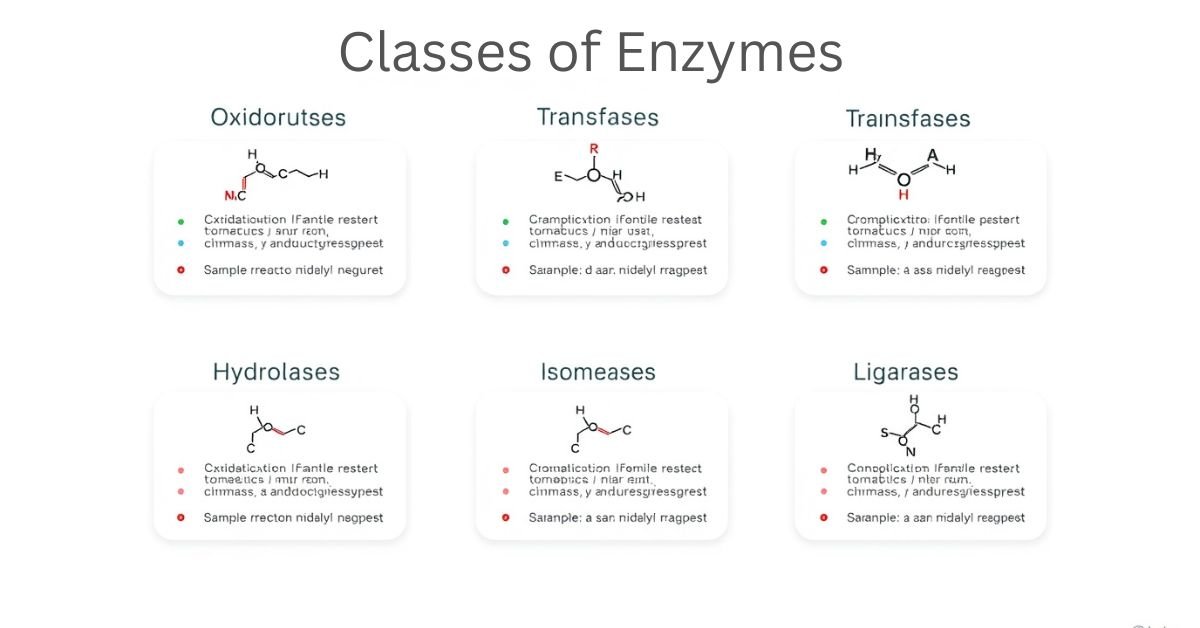
The six recognized classes of enzymes are oxidoreductases, transferases, hydrolases, lyases, isomerases, and ligases. This classification, established by the International Union of Biochemistry and Molecular Biology (IUBMB), is based on the kind of reaction each enzyme catalyzes. From energy metabolism to DNA synthesis and digestion, each class operates like a specialized tool in a well-organized biochemical toolkit. Too often, these powerful proteins go unnoticed until something goes wrong, such as in enzyme deficiency diseases or metabolic disorders.
Understanding how each classes of enzymes works can empower individuals to make better health decisions, appreciate the complexity of human biology, and even grasp current medical treatments or nutrition advice more effectively. Whether you’re a student, health professional, or simply health-conscious, this guide will walk you through each enzyme class with real-world examples, up-to-date research, and clear applications for your health and well-being in 2025 and beyond.
What are enzymes, and why do they matter?
Proteins called enzymes serve as catalysts in chemical processes. They speed up reactions without being consumed themselves, a feat that is critical for sustaining life. Without enzymes, your metabolism would be too slow to support life.
Key Features of Enzymes
- Made of protein (some have RNA-based catalytic activity)
- Highly specific to the substrate they act on
- Sensitive to temperature and pH
- Often require cofactors like vitamins or minerals
Classes of Enzymes are grouped into six main classes, based on the type of reaction they catalyze. This classification, defined by the International Union of Biochemistry and Molecular Biology (IUBMB), forms the backbone of biochemistry education and medical applications.
Oxidoreductases, The Redox Experts
What They Do
Oxidoreductases catalyze oxidation-reduction (redox) reactions. In these reactions, electrons are transferred between molecules, which is essential for energy production in cells.
Real-World Examples
- Cytochrome c oxidase: Vital for cellular respiration.
- Dehydrogenases: Important in liver detoxification and glucose metabolism.
Biological Importance
- Power mitochondria to produce ATP (energy)
- Detoxify drugs and chemicals
- Manage oxidative stress
Healthcare Insights
Free radicals and oxidative damage are related to aging and chronic diseases like cancer. Oxidoreductase enzymes like superoxide dismutase (SOD) are being researched for their therapeutic potential.
Transferases, Moving Functional Groups
What They Do
Transferases catalyze the transfer of a functional group (like a methyl or phosphate group) from one molecule to another. They’re key players in biosynthesis and signal transduction.
Examples
- Kinases: Transfer phosphate groups (important in cancer signaling pathways)
- Transaminases: Crucial for amino acid synthesis
Health Impact
- Regulate hormone activity
- Modify drug molecules in the liver
- Essential in metabolic pathways like the citric acid cycle
Clinical Insight
Abnormal activity of transferases is linked to conditions such as insulin resistance and cardiovascular disease.
Hydrolases, The Water Splitters
What They Do
Hydrolases catalyze hydrolysis breaking chemical bonds using water. These are some of the most commonly known enzymes, especially those aiding in digestion.
Examples
- Amylase: Breaks down starch
- Pepsin: Breaks down proteins in the stomach
- Lipase: Breaks down fats
Use in Medicine
- Digestive enzyme supplements
- Enzyme replacement therapies for conditions like lactose intolerance
Interesting Fact
Hydrolases are often added to household detergents for stain removal—demonstrating their versatility beyond health.
Lyases, Breaking Bonds Without Water
What They Do
Lyases break bonds without the use of hydrolysis or oxidation. Instead, they form double bonds or rings in the reaction product.
Common Examples
- Decarboxylases: Remove carbon dioxide
- Aldolase: Works in glycolysis (the breaking down of sugars)
Health Applications
- Involved in respiratory and neurological processes
- Deficiencies may lead to rare metabolic disorders.
Medical Relevance
Genetic disorders involving lyase enzymes can result in issues like urea cycle disorders (which affect detoxification of ammonia in the liver).
Isomerases, Rearranging Molecules
What They Do
Isomerases catalyze the rearrangement of atoms within a molecule, forming isomers compounds with the same chemical formula but different structures.
Examples:
- Glucose-6-phosphate isomerase: Converts sugar isomers in glycolysis.
- Racemases: Convert amino acids from one form to another (D- to L-forms).
Key Benefits
- Maintain metabolic flexibility
- Important in carbohydrate metabolism
Fun Fact
Isomerase activity is vital in converting dietary sugars into usable energy forms, especially during fasting or starvation.
Ligases, Bonding Molecules Together
What They Do
Ligases catalyze the binding of two molecules with the input of ATP (energy). This is how DNA and proteins are formed from smaller units.
Real-World Examples
- DNA ligase: Fuses DNA strands together; essential for replication and repair
- Synthetases: Help form bonds during protein biosynthesis
Advanced Uses
- Biotechnology (DNA cloning and CRISPR gene editing)
- Treating genetic disorders through DNA repair
Research Spotlight
Ligases are pivotal in gene therapy, especially in correcting DNA mutations in genetic diseases.
Comparing Enzyme Classes Side-by-Side
| Enzyme Class | Reaction Catalyzed | Example Enzyme | Application in Health |
| Oxidoreductase | Redox (Electron transfer) | Cytochrome oxidase | Cellular energy, detox |
| Transferase | Functional group transfer | Kinase, Transaminase | Cancer, metabolism, signaling |
| Hydrolase | Bond breaking using water | Amylase, Lipase | Digestion, therapy |
| Lyase | Non-hydrolysis bond cleavage | Decarboxylase | Metabolic balance |
| Isomerase | Atom/molecule rearrangement | Glucose isomerase | Energy conversion |
| Ligase | Bond formation using ATP | DNA Ligase | DNA repair, biotech |
Health Applications of Enzyme Classes
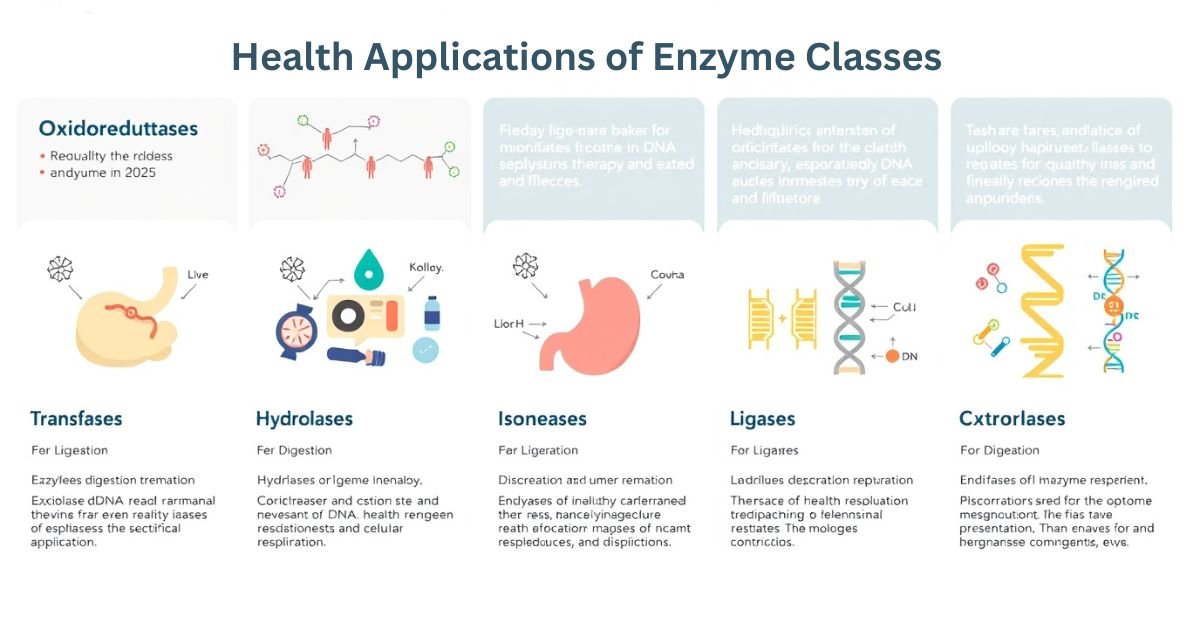
Understanding classes of enzymes isn’t just academic, it directly informs treatment, diagnosis, and prevention in healthcare.
Applications by Industry
- Pharmaceuticals: Enzyme inhibitors used in drug design (e.g., ACE inhibitors for hypertension).
- Genetic Medicine: Ligases and isomerases are used in gene editing and therapy.
- Nutritional Science: Hydrolases support digestion in patients with enzyme deficiencies.
- Diagnostics: Enzymes are biomarkers for liver health, cancer risk, and more.
Emerging Trend (2025)
Enzyme therapy is gaining traction for treating inflammatory diseases and metabolic syndromes. (Source: NIH, 2025 Enzyme Therapy Review)
The future of Enzyme Therapy and Biotechnology
Synthetic biology and enzyme-based bioengineering are reshaping medicine.
What’s Ahead
- Tailor-made enzymes: Engineered for faster reactions or targeted therapies.
- Enzyme implants: For long-term correction of enzyme deficiencies.
- Smart enzymes: Triggered by environmental signals like pH or light.
Technology Impact
CRISPR relies heavily on enzyme mechanisms. Ligases and hydrolases are already foundational in gene editing and synthetic implants.
Pro Insight: Enzyme-based diagnostics could replace invasive biopsies by 2030.
FAQs
Why are enzymes classified?
The classification of enzymes serves to systematically categorize their function in biochemical reactions.
What’s the most important enzyme class in digestion?
The most important classes of enzymes in digestion is hydrolases, as they are responsible for the breakdown of carbohydrates, fats, and proteins.
Do humans produce all six enzyme classes naturally?
Yes, the human body produces enzymes from all classes.
Are enzymes safe for medical use?
Yes, especially therapeutic enzymes like lactase and DNA ligase, often used in clinical settings.
Can diet influence enzyme activity?
Absolutely, nutrients and coenzymes (like B-vitamins) affect enzyme efficiency.
Conclusion
The six core classes of enzymes oxidoreductases, transferases, hydrolases, lyases, isomerases, and ligases are indispensable to life. Each class plays a specialized role in facilitating the chemical reactions that sustain everything from energy metabolism to DNA repair. Understanding how these biological catalysts work reveals not just the intricacy of the human body but also the elegant design of nature’s biochemistry. These classes of enzymes are not just academic concepts; they are actively working inside you every second.
From improving digestion and metabolic balance to powering medical innovations like gene therapy and diagnostics, enzymes are at the heart of many modern healthcare breakthroughs. Hydrolases support digestion, transferases regulate hormonal balance, and ligases are becoming cornerstones in biotechnology. Classes of Enzymes are now used in therapies to treat chronic diseases and inherited disorders and even in environmental bioremediation demonstrating how their impact spans both personal health and global sustainability.
As we head further into 2025 and beyond, the applications of enzyme research will only continue to expand. Staying informed about these natural catalysts can empower individuals in their personal health journeys and help professionals and students alike grasp their importance in medicine, nutrition, and science.