

Introduction
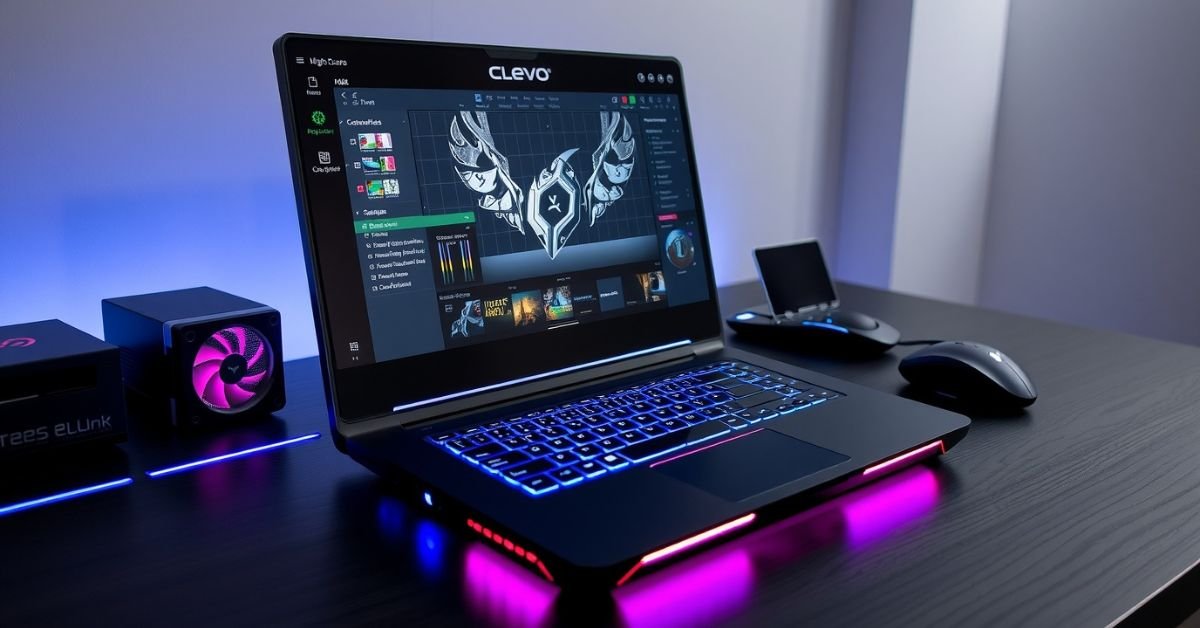
As the gaming and high-performance laptop market continues evolving in 2025, enthusiasts and professionals alike are turning toward powerful, customizable machines for their workflows and gameplay. One such quietly dominant contender is the Clevo PA71, a high-performance chassis model by Taiwanese OEM Clevo, which has become the backbone for various rebadged laptops sold under brands like Sager, Origin PC, and Schenker.
While Clevo doesn’t sell its products directly to customers, the PA71 has built a loyal following because of its modularity, raw power, and long-term upgradeability. But is it still worth considering in 2025’s competitive tech landscape where newer names like Valve’s Steam Deck, ASUS ROG series, and Apple’s M-series chips dominate headlines?
This guide explores everything you need to know about the Clevo PA71 from technical performance and build quality to practical user experience and comparisons with today’s most influential gaming laptops.
What ‘s the Clevo PA71?
The Clevo PA71 is not a product you’d find on store shelves under the Clevo name. Instead, it’s a chassis base built by Clevo, a Taiwanese original equipment manufacturer (OEM) known for producing high-performance barebones laptops. These are sold to system integrators like XMG (Schenker), Sager, and Eurocom, who customize and sell them to consumers.
In essence, the PA71 is a performance-first platform that offers:
- Custom options for CPU, GPU, RAM, and storage
- Rigid durability suited for gamers and workstation pros
- Thermal systems designed to handle overclocked components
You might encounter the PA71 under different brand names, but its inner DNA remains consistent with Clevo’s commitment to raw performance and modularity.
Target Audience: Gamers, content creators, 3D artists, engineers, and IT professionals seeking a customizable and powerful mobile workstation.
Clevo’s Business Model & Why It Matters
Understanding Clevo’s OEM model is key to understanding what makes devices like the PA71 attractive to a niche yet tech-literate segment of users.
How It Works
- Clevo provides barebones laptops primarily to boutique sellers.
- Vendors then outfit the chassis with their component choices (CPU, GPU, RAM).
- Customers can custom-build their ideal machine directly from the reseller.
Why It Benefits the User
- You’re not stuck with non-upgradable components like in Dell or Apple machines.
- Greater freedom of hardware choice, including thermal paste upgrades, open BIOS configurations, and more.
- Strong enthusiast support communities for modding and software tweaks.
This model fits perfectly with the 2025 demand for longer lifecycles, repairability, and performance-on-demand systems.
Spec Breakdown
As the core of a customizable platform, the specifications of the PA71 vary significantly depending on configuration. Below is a chart summarizing the most common 2025-level configurations available for the PA71 platform under current integrators.
Clevo PA71 (2025 Config Sample)
| Component | Specification Range |
| CPU | Intel Core i9-13980HX / AMD Ryzen 9 7945HX |
| GPU | NVIDIA RTX 4080 / RTX 4090 (Laptop variants) |
| RAM | Up to 64 GB DDR5, 5600 MHz |
| Storage | Dual M.2 NVMe SSDs (Up to 8TB combined) |
| Display | 17.3″ sRGB or DCI-P3 FHD/QHD 165Hz/240Hz |
| Keyboard | Full RGB per-key backlit mechanical keyboard |
| Battery | 6-Cell, varying from 62Wh to 89Wh |
| Ports | Thunderbolt 4, USB-C, mini DisplayPort, HDMI |
These specs put Clevo-based systems in direct competition with top-tier models like Alienware X17 R2, Razer Blade 17, or ASUS ROG Strix SCAR all with the added bonus of being mod-friendly.
Real-World Performance
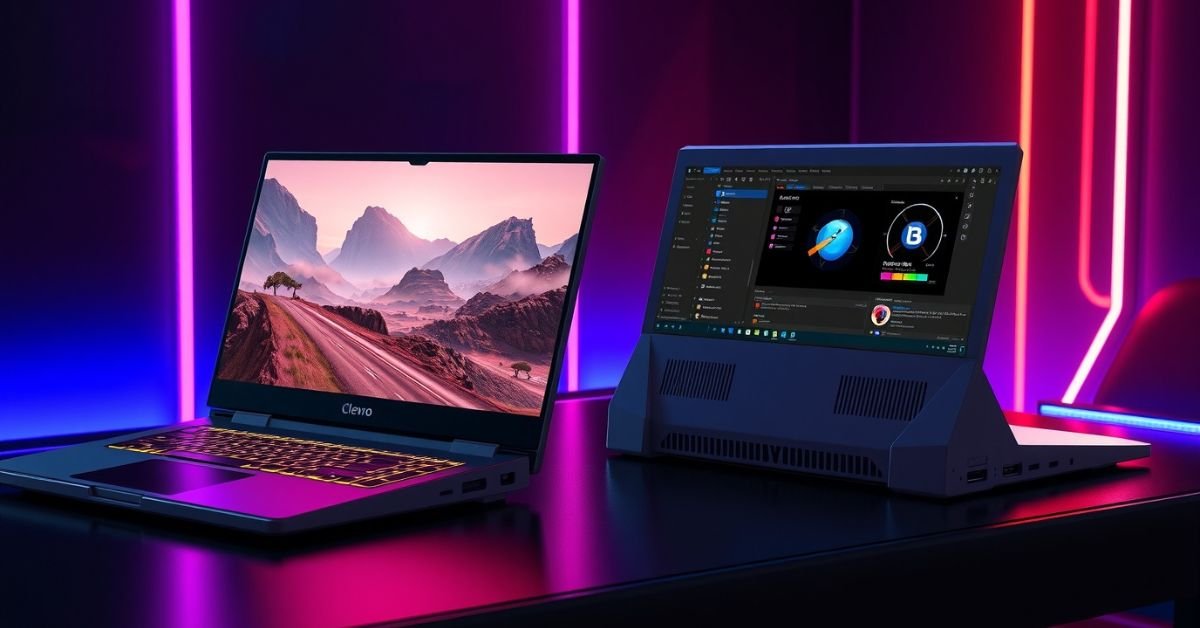
Thanks to high-tier thermal designs and custom build options, the PA71 can match, and often outperform, mainstream counterparts in real-world use scenarios.
Gaming Benchmarks (2025)
| Game (Ultra Settings @ 1440p) | Average FPS (RTX 4080 + i9-13980HX) |
| Cyberpunk 2077 (RT) | 82 FPS |
| Baldur’s Gate 3 | 131 FPS |
| Call of Duty: MW III | 144 FPS |
| Starfield | 90 FPS |
Productivity Use
- 3D Rendering (Blender RTX): Top 5% in class
- Video Editing (4K Export): ~28% faster than M2 Max MacBook Pro
- Machine Learning (Tensorflow) supports full GPU acceleration and includes CUDA support.
Both temperatures and fan acoustics remain controlled under typical workloads, though gaming at maximum settings can push fans louder than ultrabooks.
Build Quality & Design Characteristics
While many mainstream laptops focus on sleekness, the PA71 champions durability and functionality:
- Materials: Aluminum-magnesium alloy and reinforced high-grade plastic
- Weight: Between 6.5 and 7.5 lbs depending on build
- Dimensions: Bulky, but with ample airflow and port spacing
- Display Bezels: Not ultra-thin but highly functional
Unlike Razer or Apple laptops, the PA71 prioritizes thermal flow and port variety over visual minimalism.
Design Appeal: Not the sexiest, but Form > Flash, especially for power users.
Upgradeability & Modding Potential
This is where the Clevo PA71 truly shines modularity.
Upgrade Ease
- CPU & GPU: Semi-upgradeable (non-soldered GPU options in some builds)
- RAM: Fully accessible (2x slots)
- Storage: Dual M.2 slots + 2.5″ bay in select builds
- BIOS Tweaks: Open BIOS via community support for undervolting, fan curves.
DIY enthusiasts highly value the Clevo platform for longer usability and ownership control, a fossil rarity in 2025’s soldered-everything market.
Cooling System Performance
Despite the performance load, the Clevo PA71 manages heat with finesse.
Thermal Performance Table (High Load)
| Test Mode | CPU Temp (°C) | GPU Temp (°C) | Notes |
| Idle | 42 | 39 | Whisper quiet fans |
| Gaming (Ultra) | 88 | 76 | Manageable for RTX 4080 |
| Video Rendering | 81 | 74 | Below throttling thresholds |
| Stress Test (Max) | 95 | 81 | Higher than ideal briefly |
Thanks to wide exhausts, dual heat pipe designs, and manual fan profiles, the PA71 shows remarkable consistency even with demanding tasks.
Comparisons: Clevo PA71 vs. Modern Gaming Laptops (2025)
| Feature | Clevo PA71 | ASUS ROG Strix | Razer Blade 17 |
| Customizability | ✅ Full | ❌ Limited | ❌ Very Limited |
| Cooling System | ✅ Advanced | ✅ Balanced | ⚠️ Thermal Throttle |
| Repairability | ✅ Excellent | ⚠️ Moderate | ❌ Poor |
| Design Language | ⚠️ Bulky | ✅ Stylish | ✅ Sleek |
| Price to Value | ✅ High | ⚠️ Moderate | ❌ Expensive |
If power per dollar, upgradability, and customization matter, you’ll find tremendous value in the Clevo framework.
Key Pros & Cons
Pros
- Excellent thermal and power performance
- Custom builds are tailored to needs.
- Easy to upgrade components
- Battle-tested keyboard with per-key RGB
- High I/O variety: Ethernet, TB4, HDMI
Cons
- Heavier and bulkier for daily lugging
- Fan noise under full load
- No direct Clevo support goes through vendors
Ideal For: Gamers, animators, engineers, and power users who prioritize performance and customization over design glitz.
Where can I get the Clevo PA71 in 2025?
Since Clevo doesn’t sell directly, check these resellers:
- Sager Notebooks: U.S.-based, wide configurations
- XMG / Schenker: EU Popular in Europe
- Eurocom: CA High-performance models, even with desktop CPUs.Us
- AVADirect: US Niche, custom modding-friendly
Use configurators on these sites to tailor memory, GPU, storage, and thermal accessories.
FAQs
Is the Clevo PA71 suitable for gaming in 2025?
Yes, it can handle AAA games at high settings with RTX 4080/4090 configurations.
Can I buy the Clevo PA71 directly from Clevo?
No. You must purchase through system integrators like Sager, XMG, or Eurocom.
Is the Clevo PA71 lightweight?
No. It’s a performance-first laptop, weighing around 7 lbs.
Can I upgrade the RAM and storage?
Yes. It supports up to 64 GB DDR5 RAM and dual NVMe SSD installations.
Is it better than Alienware in performance?
Custom builds can offer even better performance, particularly when considering thermals and cost.
Conclusion
The Clevo PA71 continues to stand out in 2025 as one of the most versatile and performance-driven laptop platforms available for gamers, creators, and power users. Unlike mainstream laptops that prioritize sleek design over functionality, the PA71 puts performance, thermal efficiency, and upgradeability at the forefront. Whether you’re running AAA games at high resolutions, editing 4K video, or working intensively with 3D modeling applications, the PA71 handles it all with ease, particularly when configured withthe most recent NVIDIA RTX 40-series GPUs and AMD or Intel CPUs.
Where it truly shines is in its customization potential. It offers an uncommon level of control over hardware choices, BIOS settings, and future upgrade paths qualities often stripped from modern ultra-thin laptops. This makes it a future-proof investment for tech-savvy users who want more than just a plug-and-play solution. Although it’s larger and heavier than competitors like the Razer Blade or ASUS ROG models, the added bulk pays off with better thermal performance, modularity, and durability.
If you’re looking for complete control over your machine’s performance and lifecycle, and you don’t mind trading off some portability for power, it remains a top choice in 2025. Start by choosing a trusted system integrator like Sager or XMG to customize your build and unlock the full potential of this powerhouse laptop platform.