

Introduction
In January 2026, the gaming world changed in a big way. Players started caring less about flashy graphics and more about speed. Not internet speed alone, but response speed, the tiny delay between pressing a button and seeing action on screen. That delay is called latency. And today, even a few milliseconds can decide who wins or loses.
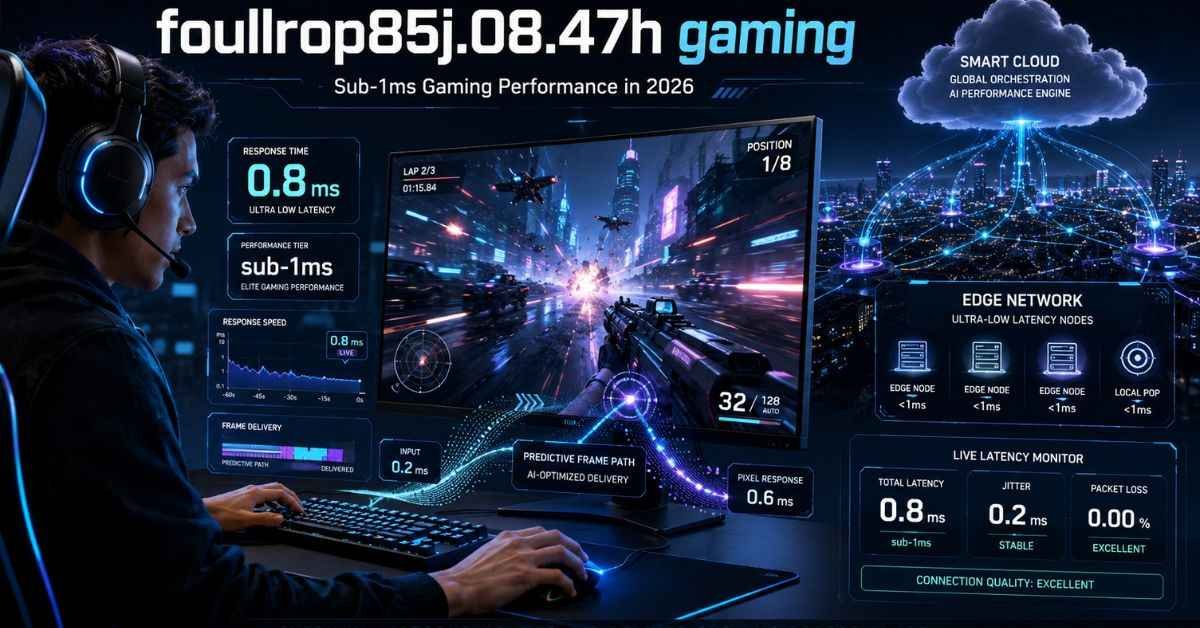
This is where foullrop85j.08.47h gaming enters the spotlight. Built around response times under one millisecond, it represents a new level of performance. For competitive players, that means smoother aim, faster reactions, and more consistent gameplay. For casual players, it means less frustration and better control.
In this article, you’ll learn what makes this system different, how it works, why 2026 became a turning point, and what it means for the future of gaming.
Why 2026 Became a Turning Point for Gaming Speed
For many years, game developers worked on making graphics better and places bigger. But by early 2026, players began asking a different question: “Why does my game still feel delayed?”
Major esports tournaments revealed that even small latency differences could impact match results. Competitive players noticed that systems running at 3–5 milliseconds felt slower than setups under 1 millisecond. Network providers also expanded fiber coverage and edge computing hubs in 2026.
These upgrades made ultra-low delay systems possible for more people. That’s when foullrop85j.08.47h gaming started gaining attention. It focused on reducing total system delay, not just improving graphics cards or internet speed. The shift was simple but powerful: performance is now measured in milliseconds.
What Does Sub‑Millisecond Response Really Mean?
Sub‑millisecond response means your system reacts in less than one millisecond after you press a key, click a mouse, or move a controller.
To understand this, imagine stacking tiny delays:
- Input device delay
- Computer processing time
- Graphics rendering
- Network travel
- Display refresh
If each step adds just 1 millisecond, the total delay quickly rises. Foullrop85j.08.47h gaming reduces these layers together instead of fixing just one part. The result feels instant and smooth. Here is a simple comparison:
Latency Comparison in 2026
| Gaming Setup Type | Average Response Time | Experience Level |
| Standard Console | 8–12 ms | Good |
| High-End Gaming PC | 3–5 ms | Very Good |
| Sub‑Millisecond Architecture | Below 1 ms | Elite |
When delay drops under 1 millisecond, movements feel more connected to your hands. In fast games like shooters or racing titles, this difference becomes noticeable.
How the Technology Works
The system behind foullrop85j.08.47h gaming combines several technologies that work together.
- First, it uses edge computing. Instead of sending game data to distant servers, data is processed closer to the player. This reduces travel time.
- Second, it uses AI frame prediction. The system predicts your next move milliseconds ahead and prepares frames early. If prediction is correct, delay feels almost zero.
- Third, the operating system reduces background activity during gameplay. This keeps the processor focused only on the game.
The system does more than just use better hardware; it also improves the whole path of data from your hand to the screen. That is why it stands out in 2026.
Why Competitive Gamers Care So Much
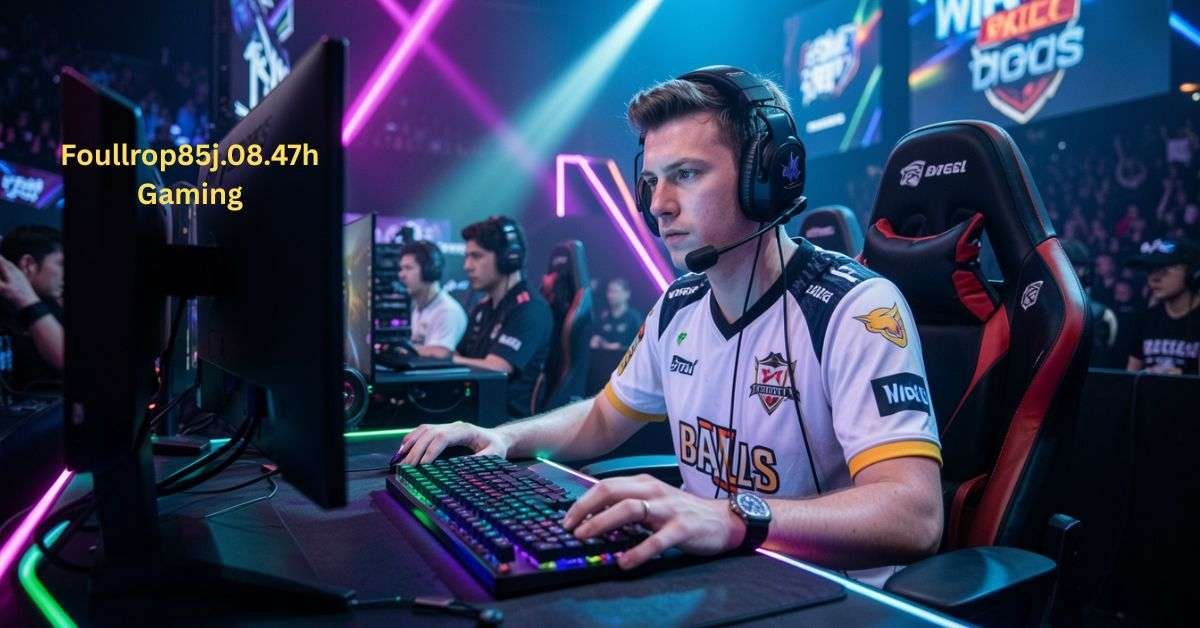
Professional gamers train for years to improve reaction time. Human reaction speed averages around 200 milliseconds. That sounds much larger than 1 millisecond, but small differences still matter. If two players react at the same time, the one with lower system delay sees results first.
In esports tournaments this year, many teams upgraded to systems powered by foullrop85j.08.47h gaming to ensure fairness and performance stability.
Players reported:
- More consistent aim
- Fewer “lag spikes”
- Better hit detection
Even spectators benefit. Streams appear smoother and closer to real-time action. In competitive play, consistency is just as important as speed.
Cloud Gaming Gets a Major Upgrade
Cloud gaming once struggled with high delay. Players often experienced 20 milliseconds or more of input lag. In 2026, that changed. New cloud platforms use edge servers placed inside cities instead of far-away data centers. This cuts down on the distance that data has to travel. Foullrop85j.08.47h gaming integrates well with these edge systems.
By combining predictive rendering and local processing nodes, cloud gaming now feels closer to traditional PC performance. This makes high-end gaming more accessible. Players no longer need expensive hardware if the network is strong enough. Cloud gaming is no longer just for casual play. It is entering competitive territory.
Hardware Still Matters But Differently
Even with advanced architecture, hardware remains important. Modern setups focus on stability instead of extreme overclocking. High polling-rate mice, fast mechanical keyboards, and 240Hz or higher monitors help reduce visible delay. However, throwing money at a graphics card alone will not achieve sub‑millisecond performance.
Foullrop85j.08.47h gaming works best when hardware, software, and network are aligned. Cooling systems, power efficiency, and clean system configurations also play a role. A stable system performs better than one overloaded with background apps. In 2026, smart optimization beats raw power.
Comparing Traditional and Sub‑1ms Systems
The difference between older systems and new ultra-fast architecture becomes clear when viewed side by side.
Traditional vs Sub‑Millisecond Gaming Architecture
| Feature | Traditional System | Sub‑1ms System |
| Server Location | Centralized | Edge-Based |
| Frame Rendering | Reactive | AI Predictive |
| Background Processes | Many Active | Minimized |
| Competitive Stability | Variable | Highly Consistent |
| Cloud Gaming Performance | Moderate Delay | Near-Local Feel |
The biggest change is predictability. Competitive players want the same response every match. Systems powered by foullrop85j.08.47h gaming aim to deliver that consistency.
Security and Stability in Ultra-Fast Systems
Speed alone is not enough. With distributed edge servers, security becomes critical. Ultra-fast systems use encrypted connections between device and server. Many also apply hardware-level authentication to prevent cheating or interference.
Because foullrop85j.08.47h gaming spreads processing across multiple nodes, stability improves. If one node experiences issues, others can take over. This makes competitive matches smoother and reduces sudden disconnections. In 2026, performance and security will grow together.
What This Means for Everyday Players
You do not need to be a professional gamer to notice benefits. Even casual players feel smoother movement and quicker response. Games feel more natural and less frustrating.
To improve your setup at home:
- Use wired internet instead of Wi‑Fi when possible.
- Close unnecessary background programs.
- Enable performance mode in your operating system.
- Choose monitors with higher refresh rates.
While not everyone can achieve sub‑1ms instantly, moving closer to this standard improves gameplay noticeably. As more services adopt foullrop85j.08.47h gaming, these benefits will become easier to access.
The Future of Gaming Performance
The shift that began in January 2026 is only the beginning. Developers are already designing games assuming ultra-low delay environments. Virtual reality stands to benefit greatly. Lower latency reduces motion sickness and improves immersion. Racing simulators and tactical shooters will also grow more precise. Industry experts predict that under‑1ms systems will become the new benchmark by late 2026.
As infrastructure expands and edge computing becomes common worldwide, foullrop85j.08.47h gaming could move from elite performance category to standard expectation. Gaming has always evolved through better graphics, stronger hardware, and faster internet. Now, the focus is sharper than ever: reduce delay, increase precision, and create a seamless connection between player and game.
FAQs
What is foullrop85j.08.47h gaming?
It is a 2026 gaming architecture designed to deliver response times under one millisecond.
Is sub‑1ms really noticeable?
Yes, especially in fast competitive games where quick reactions matter.
Do I need expensive hardware?
Not always. A stable system and strong internet connection help most.
Does it improve cloud gaming?
Yes, edge-based processing makes cloud games feel more responsive.
Will this become standard?
Many experts believe sub‑millisecond performance will become common in future gaming systems.
Conclusion
Gaming in 2026 is no longer only about beautiful graphics or powerful processors. It is about the speed you can feel. When delay drops below one millisecond, gameplay becomes smoother, more precise, and more competitive. Foullrop85j.08.47h gaming represents this new direction. By combining edge computing, predictive technology, and system-wide optimization, it reduces the tiny delays that once held players back.
Competitive teams are already adopting it, cloud services are improving because of it, and everyday gamers are starting to experience the difference. If you want better performance this year, start by checking your current latency. Upgrade what you can, optimize your setup, and choose services that support modern low-delay systems. The future of gaming is measured in milliseconds, and that future is already here.