
Introduction
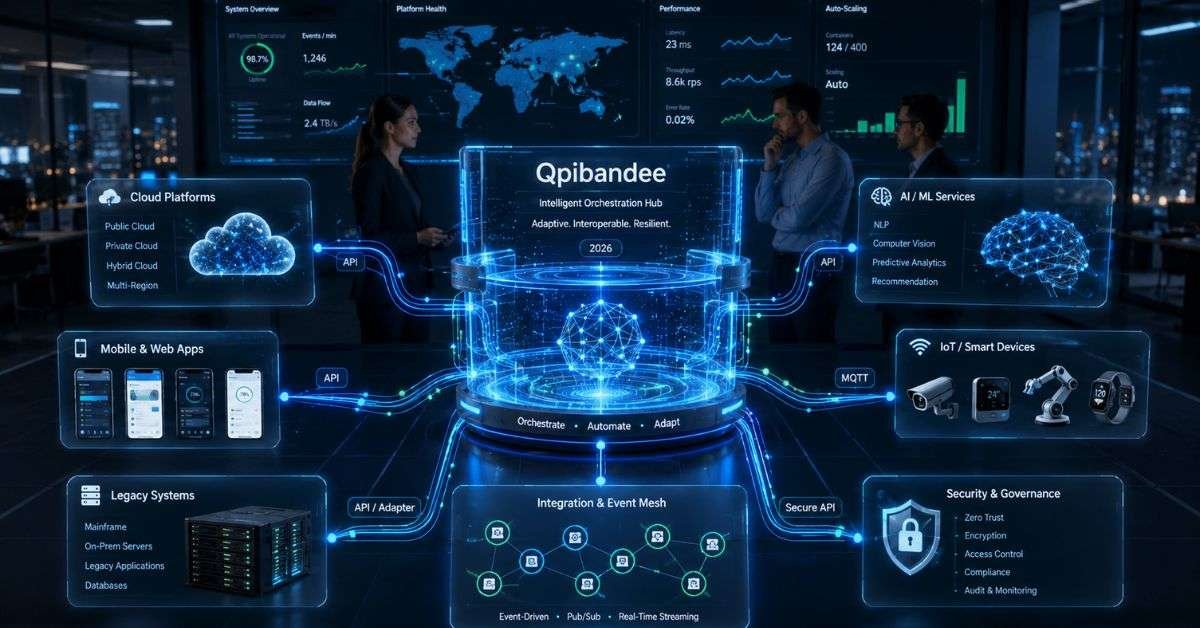
In 2026, most companies will use many digital tools at the same time. They use cloud platforms, mobile apps, AI software, smart devices, and older legacy systems. The real problem is not building these tools; it’s making them work together smoothly.
When systems don’t connect properly, businesses face delays, higher costs, and security risks. That’s where Qpibandee becomes important. It focuses on helping different technologies connect, communicate, and adjust automatically when conditions change.
Instead of being just one software product, Qpibandee is a modern system design approach. It helps companies create systems that are interoperable (able to work together) and adaptive (able to adjust automatically). In this guide, you’ll learn what it is, how it works, where it is used, and why it matters in 2026.
What is Qpibandee?
Qpibandee is a technology framework that helps different digital systems connect and adapt without breaking or slowing down.
In simple terms, it allows:
- Different platforms to share data easily
- Systems to scale up or down automatically
- Applications to respond quickly to changes
For example, imagine an online store during a big sale. Traffic increases suddenly. A traditional system may crash. A system built using it can automatically add more computing power to handle the traffic.
It focuses on three main ideas:
- Interoperability
- Adaptability
- Scalable architecture
This makes it useful for companies that rely on real-time data, automation, and cloud computing.
Why Interoperability Matters in 2026
Today, businesses rarely use just one platform. They often combine:
- Cloud services
- Mobile applications
- AI tools
- IoT devices
- On-premise servers
If these systems cannot communicate, data gets stuck in silos. Employees waste time manually moving data between systems. Interoperability solves this problem. It ensures smooth communication between tools. In 2026, according to public digital infrastructure reports, companies with strong system integration deploy new products up to 25% faster than companies with disconnected systems.
Qpibandee supports this by creating structured communication layers between platforms. Instead of building hundreds of direct connections, systems connect through a unified model. This reduces complexity and improves performance.
Core Architecture Behind Qpibandee
To understand how it works, let’s look at the basic structure. Modern systems built using Qpibandee usually include five layers:
- User Interface Layer
- API Communication Layer
- Event Processing Layer
- Adaptive Orchestration Engine
- Data & Monitoring Layer
These layers work together to manage data flow and system scaling.
Simplified Architecture Model
| Layer | Purpose | Example Function |
| User Interface | Connects users to system | Web or mobile apps |
| API Layer | Connects systems | Sends and receives requests |
| Event Layer | Handles real-time data | Processes transactions |
| Orchestration Engine | Adjusts resources automatically | Auto-scaling during traffic spikes |
| Monitoring Layer | Tracks system health | Alerts & performance reports |
This layered design keeps systems flexible. If one layer changes, the others can continue working without major disruption.
How Adaptive Systems Work

Adaptability means a system can change its behavior based on current needs.
For example:
- If website traffic increases, the system adds more servers.
- If data traffic slows, it reduces resources to save money.
- If a threat is detected, security settings adjust automatically.
This smart adjustment is powered by automation tools and real-time monitoring. In 2026, adaptive systems often use:
- AI-driven workload management
- Real-time analytics
- Cloud-based scaling
The main goal of Qpibandee is to create systems that don’t require constant manual updates. Instead, they respond automatically. This reduces downtime and improves user experience.
Real-World Use Cases
Many industries benefit from interoperable and adaptive systems.
- Healthcare: Hospitals connect patient records, diagnostic tools, and remote monitoring devices. When systems communicate properly, doctors access accurate data faster.
- Finance: Banks process millions of transactions per second. Adaptive systems detect fraud and manage traffic spikes during peak hours.
- Manufacturing: Factories use smart sensors and robotics. Systems automatically adjust production lines based on demand.
- Smart Cities: Traffic systems, energy grids, and emergency services share data in real time.
In all these cases, Qpibandee supports reliable communication and automatic scaling.
Key Performance Metrics
To measure system success, businesses track performance indicators.
Important metrics include:
- System uptime
- Response time
- Data synchronization speed
- Resource efficiency
Performance Benchmarks in 2026
| Metric | Standard Target | High Performance Level |
| System Uptime | 99.5% | 99.9%+ |
| API Response Time | Under 500 ms | Under 200 ms |
| Data Sync Delay | Under 2 seconds | Under 500 ms |
| Resource Efficiency | 70% utilization | 85%+ utilization |
Organizations using structured interoperability frameworks report lower downtime and better resource management. These measurable outcomes show the practical value of Qpibandee.
Security and Compliance
When systems connect, security risks increase. That’s why security must be built into the architecture.
Modern best practices include:
- Zero-trust access control
- Encrypted data transmission
- Continuous monitoring
- Automated threat detection
Adaptive systems can isolate affected components if a threat appears. This limits damage and keeps the rest of the system running. Compliance is also easier because monitoring tools automatically log system activity for audits. Security and adaptability work together to protect connected systems.
Implementation Steps
Adopting this approach requires careful planning. Most organizations follow these stages:
- Review current systems
- Identify integration gaps
- Build API communication layer
- Add event-driven data processing
- Deploy adaptive scaling tools
- Implement monitoring dashboards
A pilot project is often the safest way to start. Once successful, the model expands across departments. Introducing Qpibandee gradually reduces risk and improves adoption.
Benefits for Businesses
Companies adopting interoperable, adaptive systems often experience:
- Faster innovation cycles
- Lower integration costs
- Better system reliability
- Improved customer experience
In competitive markets, speed and flexibility matter. If a system cannot scale quickly, users may move to competitors. Qpibandee helps organizations stay flexible without rebuilding systems from scratch. It supports long-term digital growth.
Future Trends in 2026 and Beyond
Technology continues to evolve rapidly. Experts predict that by the end of 2026:
- Most enterprises will use AI-driven orchestration
- Edge computing will expand for faster local processing
- Automated compliance systems will become standard
As digital ecosystems grow more complex, structured interoperability frameworks like Qpibandee will become more important. Future systems may even become self-healing, meaning they detect and fix problems automatically. The goal is intelligent infrastructure that runs efficiently with minimal manual effort.
FAQs
What is Qpibandee in simple words?
It is a system design approach that helps digital platforms connect and adapt automatically.
Is it a software product?
No, it is a framework or architectural model rather than a single tool.
Who should use Qpibandee?
Businesses that rely on cloud systems, AI, or real-time data processing.
Does it improve system security?
Yes, it supports built-in monitoring and adaptive threat response.
How long does implementation take?
It depends on system size, but many projects take a few months.
Conclusion
In 2026, digital systems must do more than just function; they must connect and adapt. Disconnected systems slow down innovation and increase costs. Adaptive, interoperable systems create flexibility and resilience. Qpibandee offers a structured way to design these modern systems. By using layered architecture, real-time data processing, and automated scaling, organizations can improve uptime, reduce costs, and deliver better services.
If your business relies on multiple digital tools, now is the right time to evaluate your system architecture. Start with a small pilot project, measure performance improvements, and gradually expand. Modern innovation depends on systems that work together and adapt when the world changes.